
Support for vulnerable individuals during the asylum procedure
Some people who apply for asylum may need additional support, for example if they are an unaccompanied minor, have experienced trauma, are pregnant, or have mobility or other health issues. Although the need for additional support might be immediately obvious in some cases, in others it will not always be possible to detect a person’s vulnerability just by looking at them. That is why, from the very first contact with an asylum seeker, the IND looks for any signs that need to be considered.
You can also watch the explainer video (only available in Dutch)
The IND has been responsible for the domestic screening and registration of asylum seekers at the Ter Apel reception centre since the European Pact on Migration and Asylum came into force halfway through 2026. Part of the screening phase is the preliminary assessment of vulnerability. The IND makes its assessment on the basis of observations by staff and statements by the applicant, supplemented as necessary with signals spotted by third parties such as the Central Agency for the Reception of Asylum Seekers (Centraal Orgaan opvang asielzoekers, COA), the Royal Netherlands Marechaussee, the police, or the Nidos Foundation (stichting Nidos), which is the organisation responsible for guardianship and child protection matters in relation to unaccompanied foreign minors.
Vulnerability can take many forms, such as trauma or anxious behaviour, as well as physical limitations, age, or illiteracy. As far as the IND is concerned, it is particularly important to identify these cases at an early stage so that appropriate support can be provided during the asylum procedure.
Initial signs
A security guard at the Ter Apel reception centre may, for instance, be the first to notice the initial signs of vulnerability, for example if they see that someone has difficulty walking, or suspect that the person in question is an unaccompanied minor. Such observations are then reported to a member of staff who makes sure, for example, that the individual concerned does not have to wait unnecessarily long, or receives appropriate support in some other way. Assistance from the Nidos organisation always has to be requested in the case of unaccompanied foreign minors.
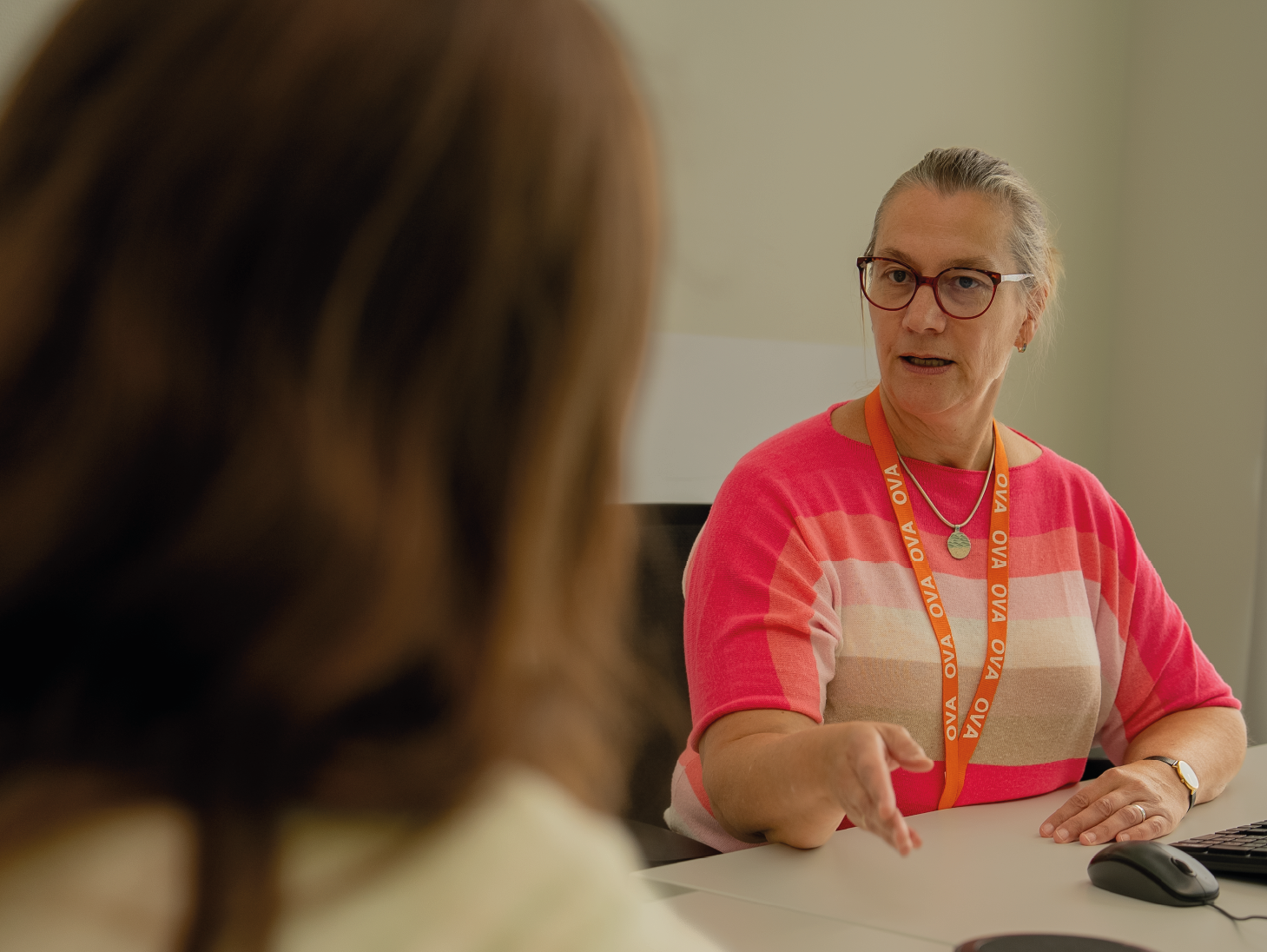
During the initial contact, IND staff will also check in to see how the person is doing. They have been trained to identify signs of vulnerability and, if there is reason to do so, ask the appropriate questions and calmly discuss the various options with the applicant. While the observations of the member of staff are important in this context, asylum seekers are also given the opportunity to explain if there are any circumstances the IND should take into account during the procedure, or that need to be reported to the COA in connection with the support that is going to be provided.
Help is on hand
Since the introduction of the new asylum procedure, applicants are generally required to use a tablet to enter the information for their asylum application themselves. However, not everyone knows how to do this. For example, someone might not be digitally literate, not speak any of the languages available on the tablet, be unable to read or write, or might not want to use the tablet for some other reason.
A member of staff will then always be on hand to help and there will always be a chance for a face-to-face conversation with the assistance of an interpreter. Alsoa decision may be made to stop using the tablet if a member of staff notices that someone is having trouble with the digital questionnaire. Staff will always be available to supervise while applicants fill in the questionnaire on the tablet, and applicants are also free to ask them any questions they might have.
Being specific
The IND’s approach is to be as objective as possible when determining vulnerability. A member of staff records what has been observed using language which is as specific as possible. This means, for example, noting whenever someone has difficulty walking, exhibits anxious behaviour, is pregnant, or cannot sit for long periods of time.
This approach helps staff who become involved later on in the asylum process, because they will then know why they need to take something into account. Any identified vulnerability is always noted down. IND staff can always review all the indicators together and then assess if appropriate support has to be provided.
Sharing the signals
Although certain signals may not affect the asylum process immediately, they could become relevant later on. Someone who says they are taking medication does not, for example, automatically need extra support during the Reception and Preparation for Asylum Applications Process (Ontvangst en Voorbereiding Asielaanvraag, OVA), because that process only takes a few hours. It may be important to be aware of this when providing asylum support, and sometimes for the rest of the asylum procedure as well. The IND therefore uses a special system to share relevant information with other partners in the chain, such as the COA.
The vulnerability assessment does not end after the first few days. While the IND has to review the information gathered no later than thirty days after the start of the asylum procedure, in what is referred to in law as a final vulnerability assessment, the work does not stop there. Any new information an individual provides later on, or any new signals that come to light during the asylum procedure, are always taken into account.
More time
If someone is identified as vulnerable, a member of staff can take more time during an interview, or a specially trained member of staff can be assigned to the case. In certain situations, the IND may seek medical advice. This is not standard procedure for everyone, but only when there is a reason to do so, for example because of feedback provided during the Reception and Preparation for Asylum Applications Process (OVA).
The basic premise is always the same, namely that not everyone who applies for asylum has the same circumstances or needs. By being alert to signs of vulnerability from the very first moment of contact and by continuing to pay attention to them throughout the entire process, the IND’s aim is to ensure that vulnerable individuals are identified as early as possible and that - where necessary - their situation is considered.